
Designing a South-Facing Living Room: A Case Study in Dulwich Village, South London
Being blessed with a south-facing living room in the UK is a real luxury. Generous daylight, warming winter sun and strong garden connections can transform how a space feels and functions.
But more light does not automatically mean better design. Without careful planning, south-facing rooms can suffer from glare, overheating, faded finishes and an unbalanced atmosphere.
Here are my key design principles for creating a beautifully balanced south-facing living room that works all year round.
Think Carefully About Your Glazing Strategy
South-facing spaces already receive a high level of daylight, so restraint is often more effective than excess.
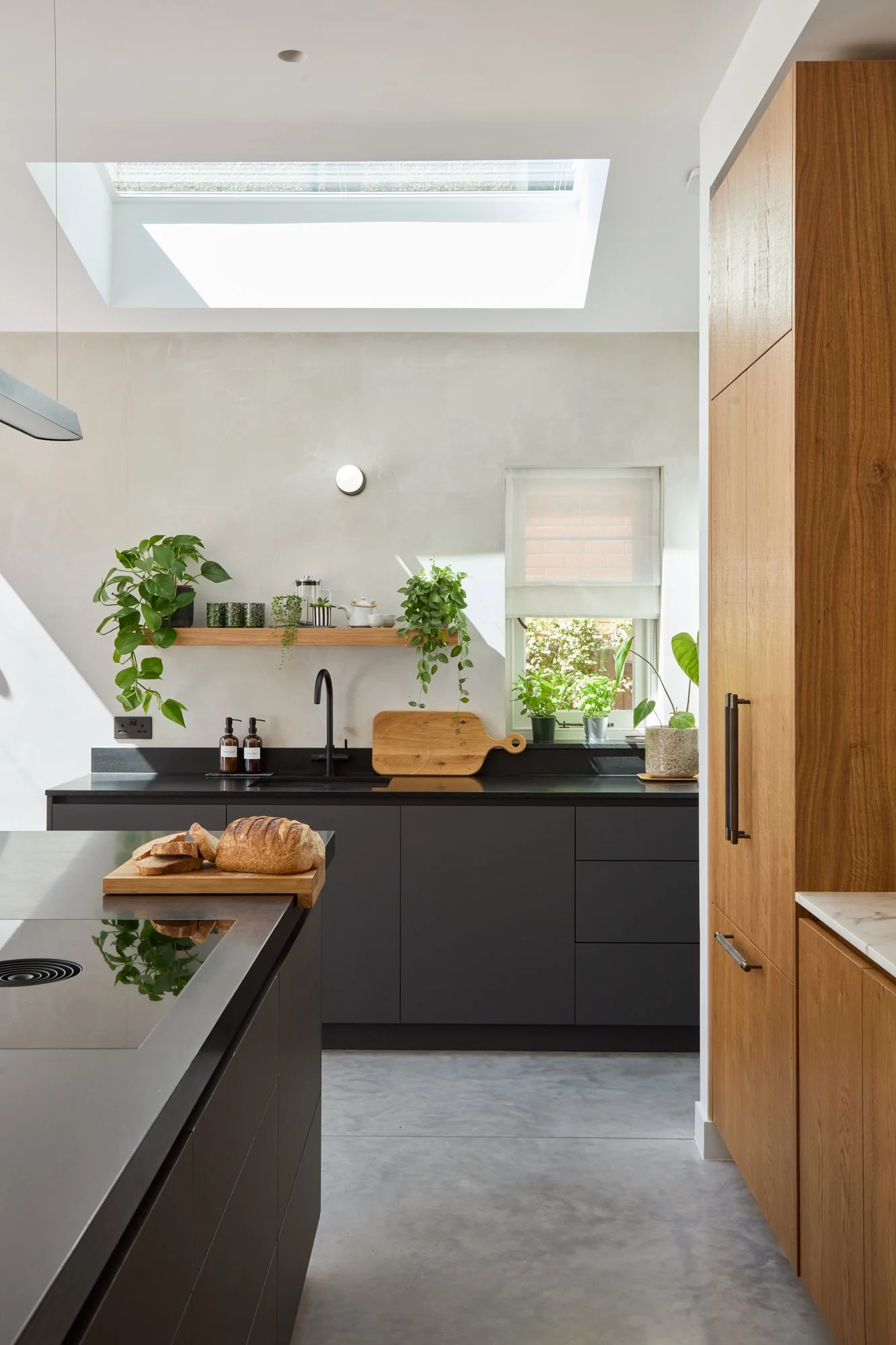
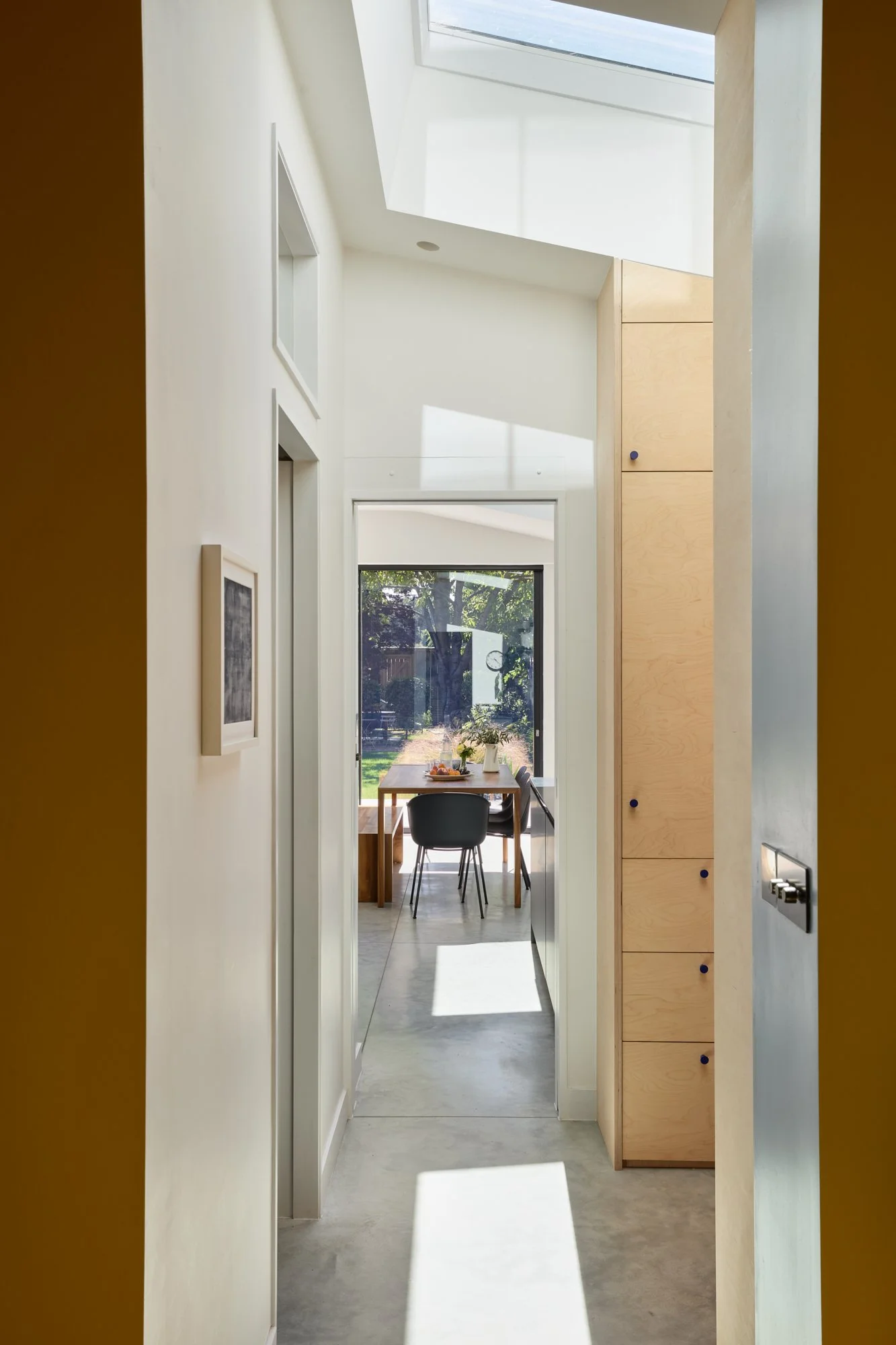
Large openings onto the garden or terrace work beautifully, creating strong visual connections and flooding the room with light. Roof-lights, however, should be approached with caution. Too many or poorly positioned skylights can lead to harsh overhead light and uncomfortable heat gain.
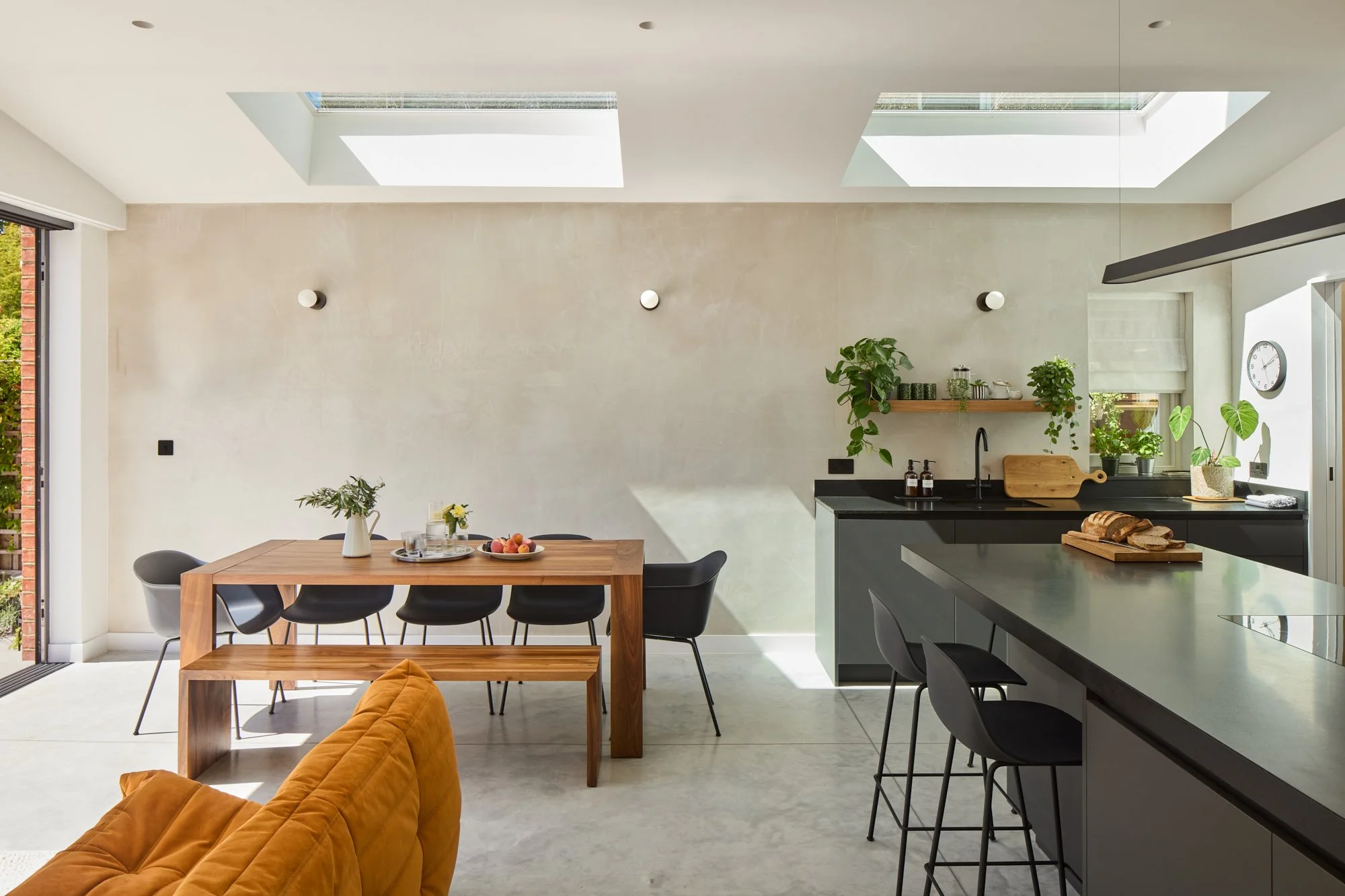
Double roof-rights, with remote operated blinds.
Shade Control Is Essential
Good shading isn’t an afterthought, it’s fundamental to how the room performs.
Integrated blinds for skylights allow you to manage glare and heat at different times of day
For glazed doors and large windows, opt for thicker sheer curtains rather than ultra-light voiles
These soften incoming light while maintaining privacy and a sense of calm
Well-chosen window treatments help filter light beautifully rather than simply blocking it.
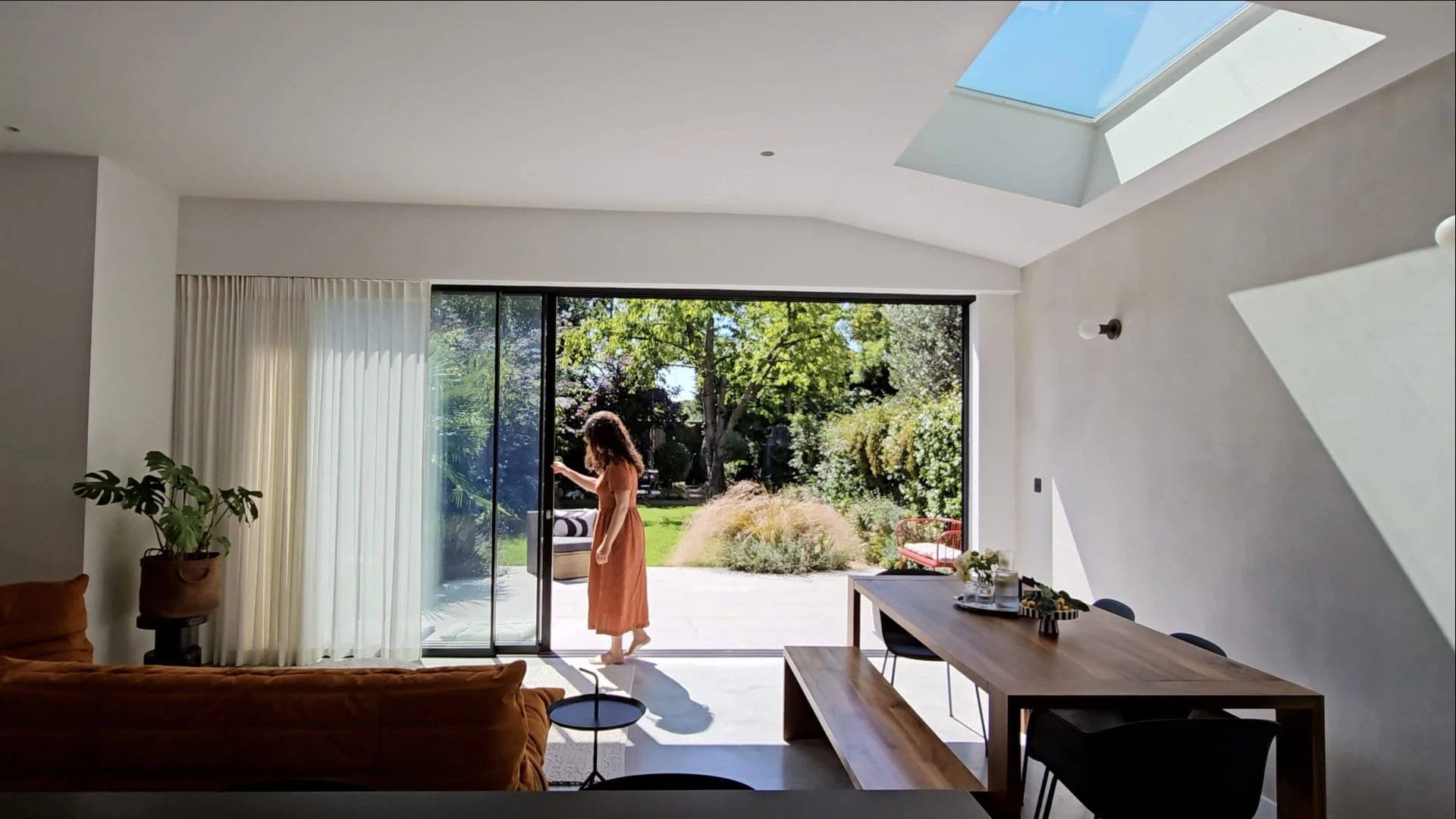
Thick sheer curtains creating just the right amount of shade control.
Cooler Colours Create Balance
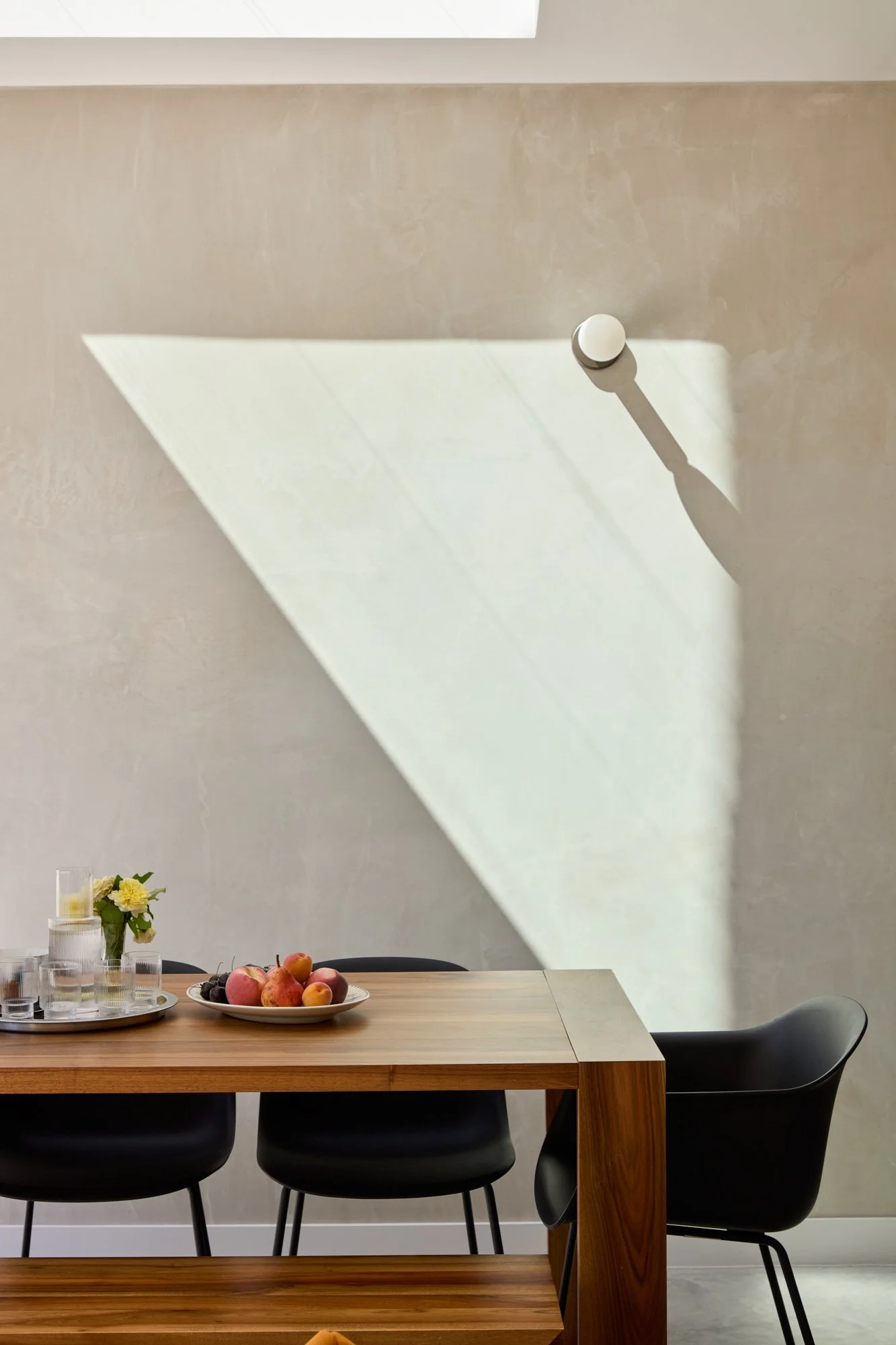
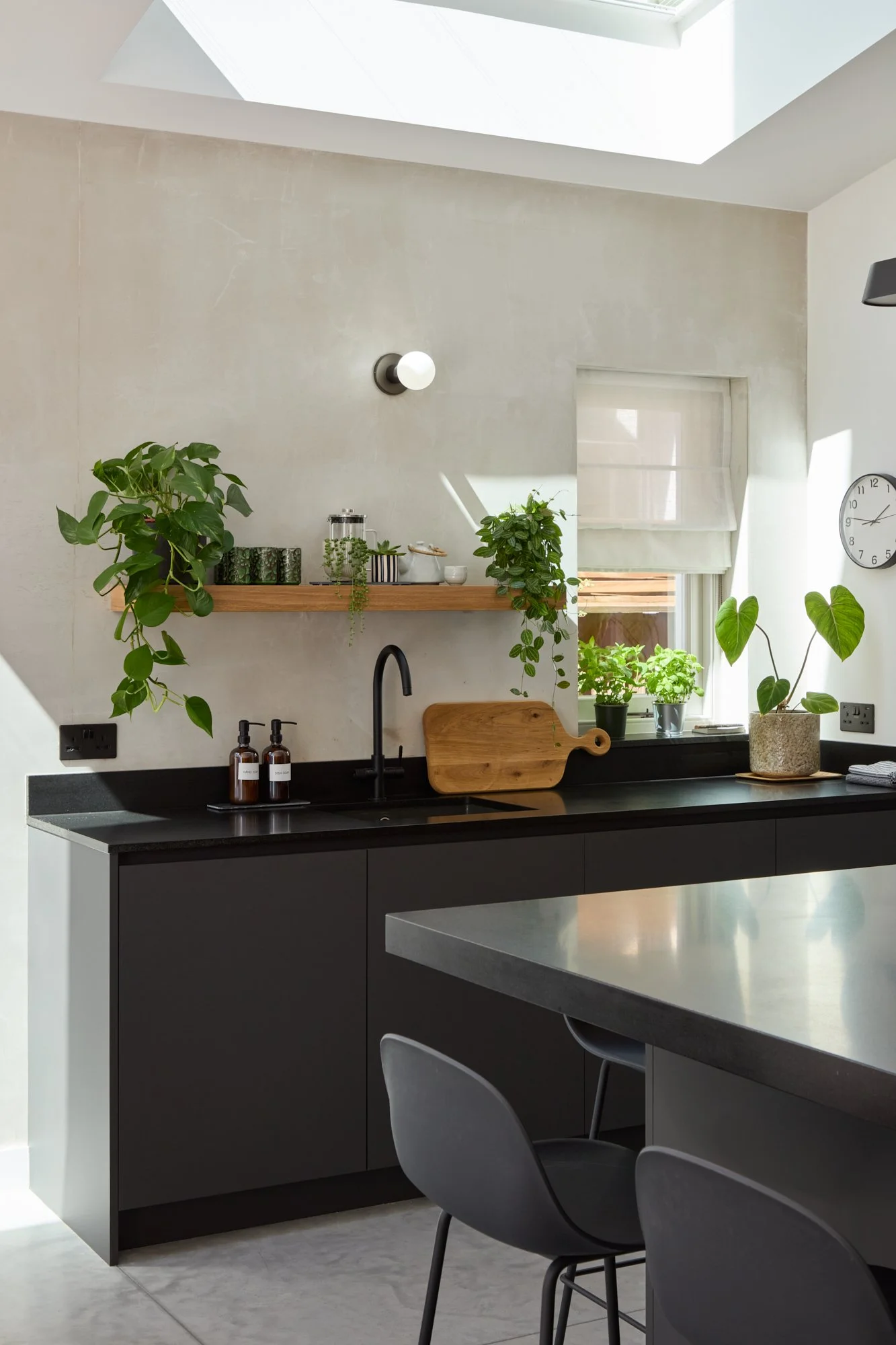
In south-facing rooms, warm sunlight naturally amplifies colour. Cooler tones on walls and floors help counterbalance this effect.
Soft greys, muted greens, stone tones and cooler neutrals prevent the space from feeling overly warm or yellow throughout the day. These shades also tend to age better as light conditions change from morning to evening.
Create a Winter Sun Trap
One of the joys of a south-facing room is how low winter sun penetrates deep into the space.
Design a comfortable sun-catching corner : a reading chair, window seat or small sofa positioned to soak up those winter rays. It’s a simple move that adds genuine lifestyle value, especially during darker months.
You really will thank yourself later.
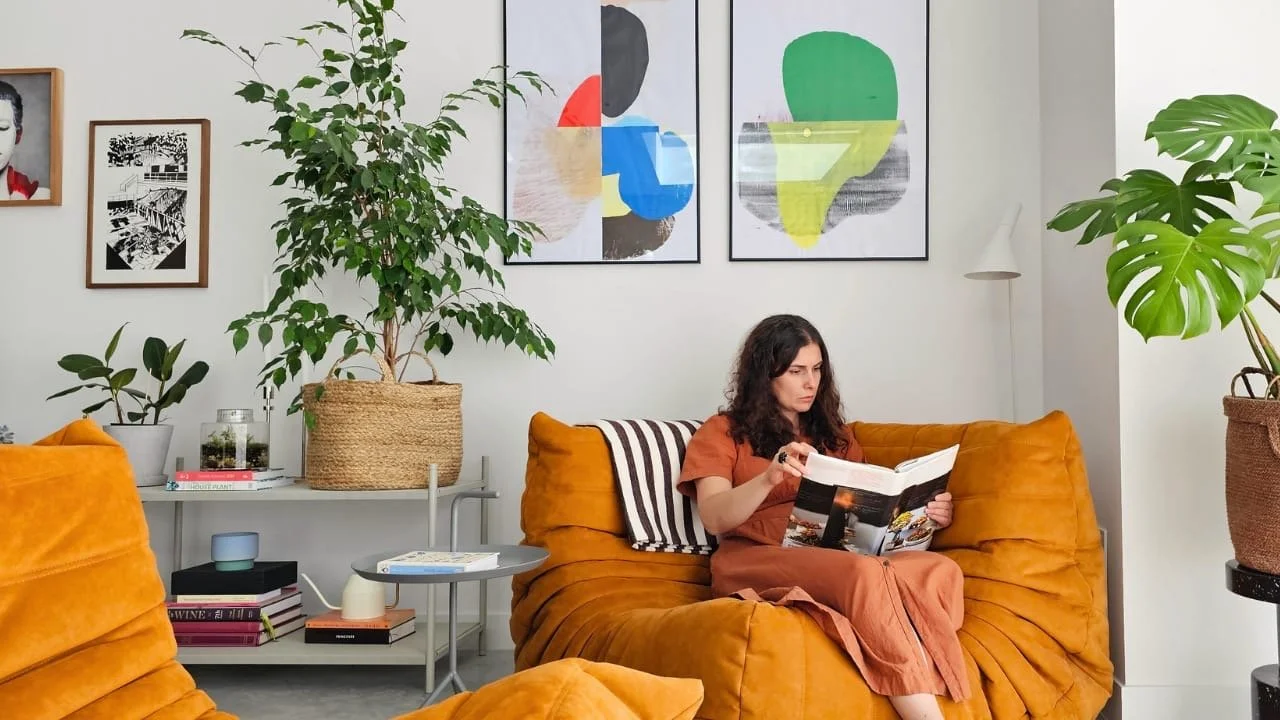
Sunny reading corner, flooded with light all year around.
Don’t Forget Ventilation
Light and heat go hand in hand, so ventilation is crucial.
If you’re including skylights, make sure at least some are openable. Alternatively, incorporate a discreet opening window to allow fresh air to circulate during warmer months. Good airflow keeps the room comfortable and prevents it from feeling stuffy or overheated.
Prioritise UV Protection
Strong sunlight can be tough on interiors.
When specifying upholstery, rugs and window treatments, look for UV-resistant fabrics to reduce fading and material degradation over time. This is especially important in family living rooms where pieces are expected to last.
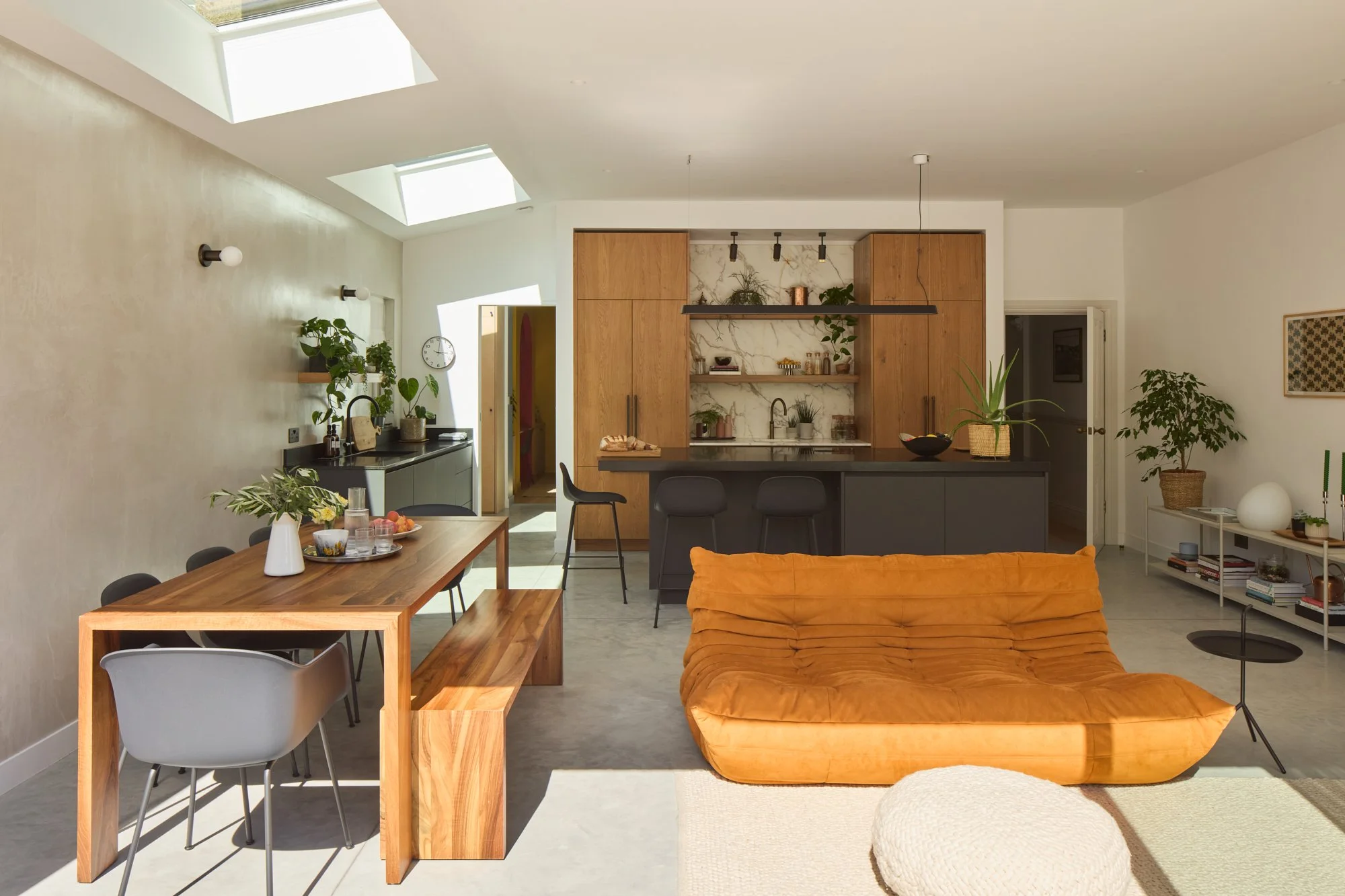
Togo sofa by Ligne Roset, in alcantara fabric
Be Mindful With Art and Decor
Artwork and photography are particularly vulnerable in south-facing spaces.
Avoid placing valuable or sentimental pieces in direct sunlight. Where exposure is unavoidable, consider UV-protective glass when framing. It’s a small investment that can significantly extend the life of artworks and prints.
Final Thoughts
A south-facing living room offers incredible potential. By carefully balancing glazing, colour, shading and material choices, you can create a room that feels calm, comfortable and beautifully liveable in every season.
If you are planning a renovation or rethinking your living space and would like guidance tailored to your home, I would be very happy to help.