
In this post, I explore some of my go-to tile combinations, from the most minimal to more expressive schemes. The right tile combination should always be considered within a broader, holistic vision that reflects the overall style and mood of the space.
Monochromatic schemes
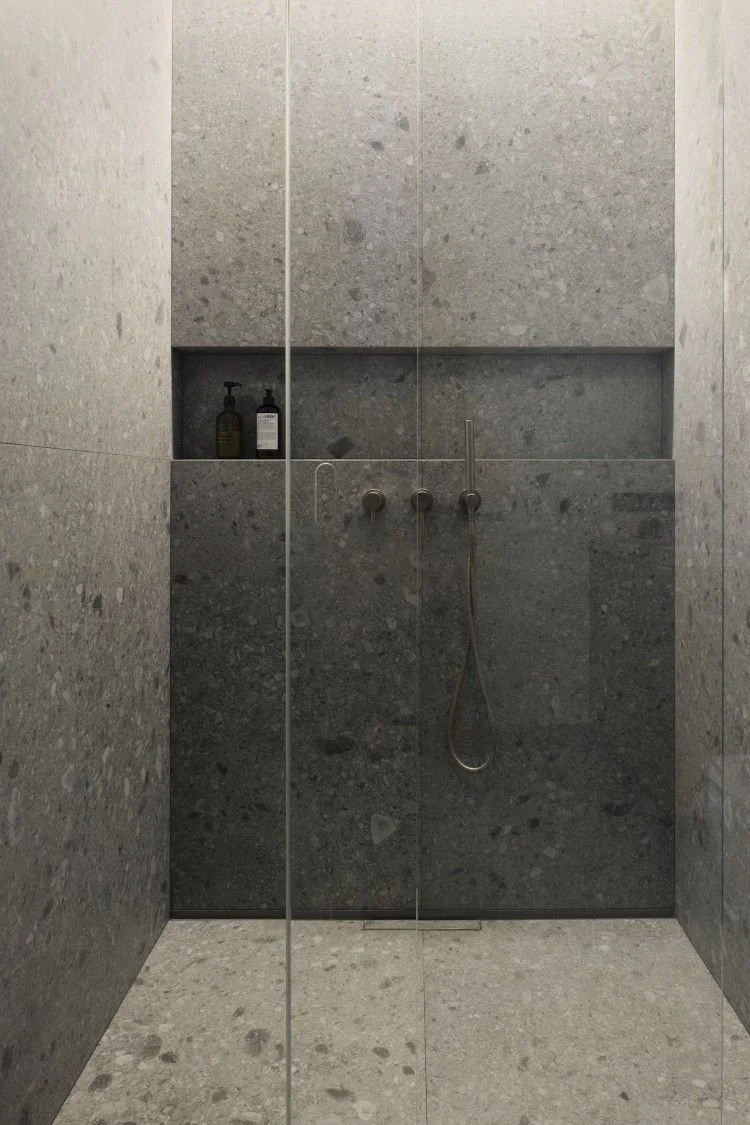
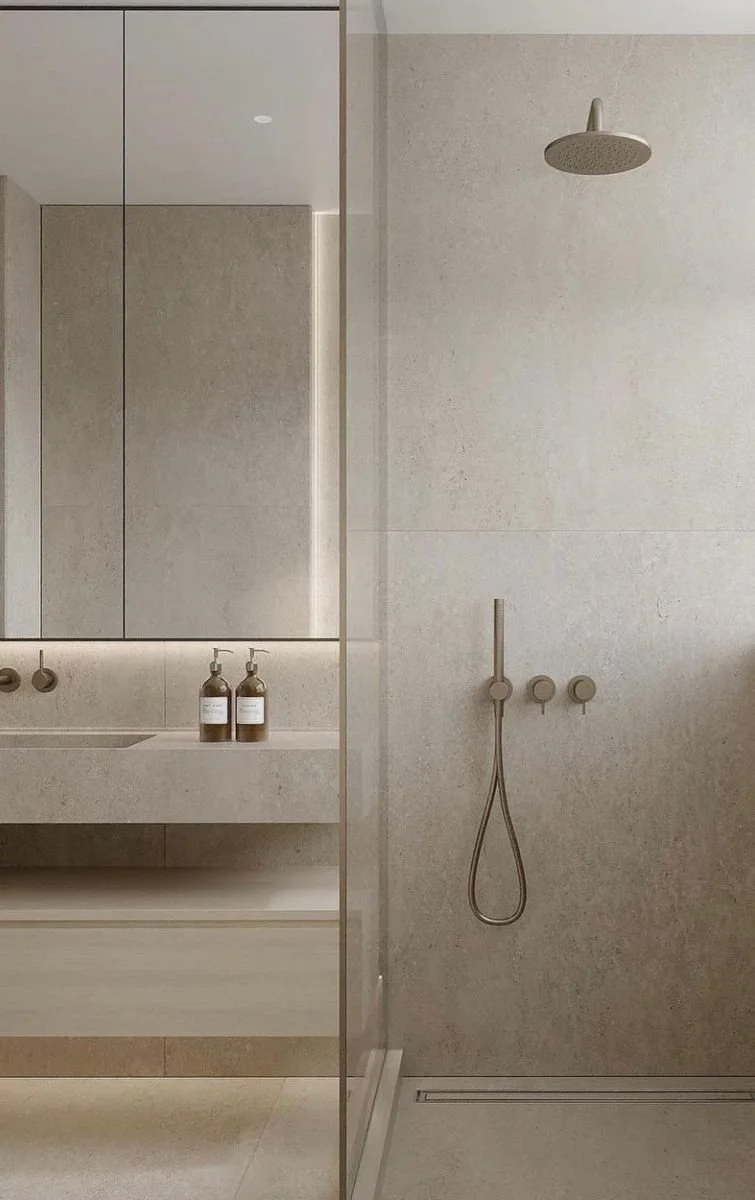
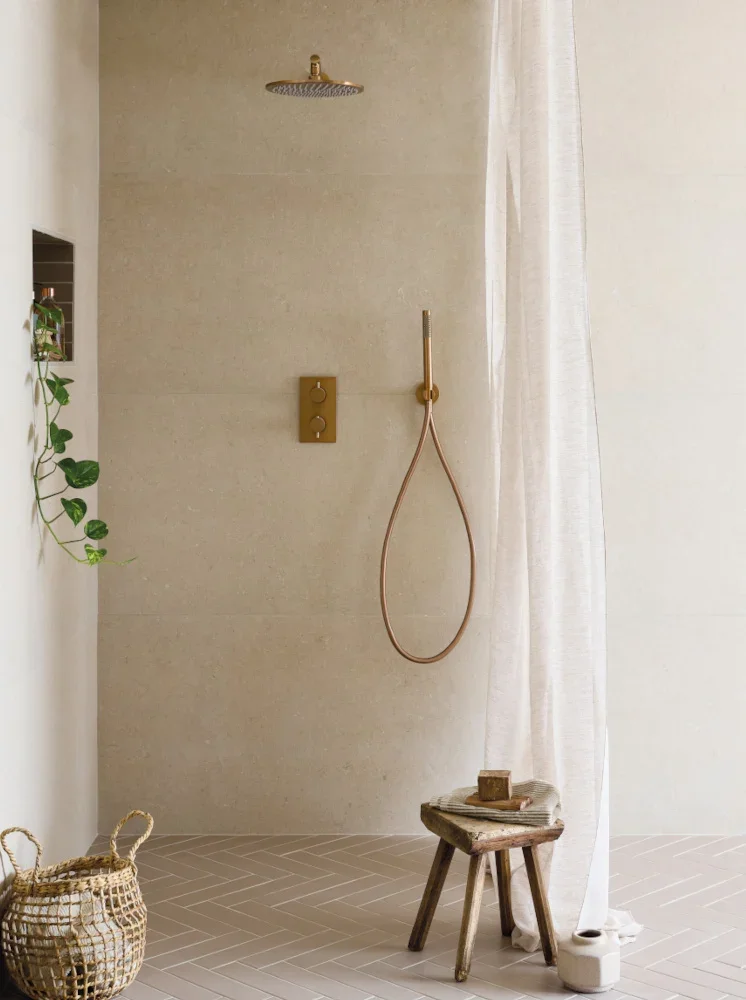
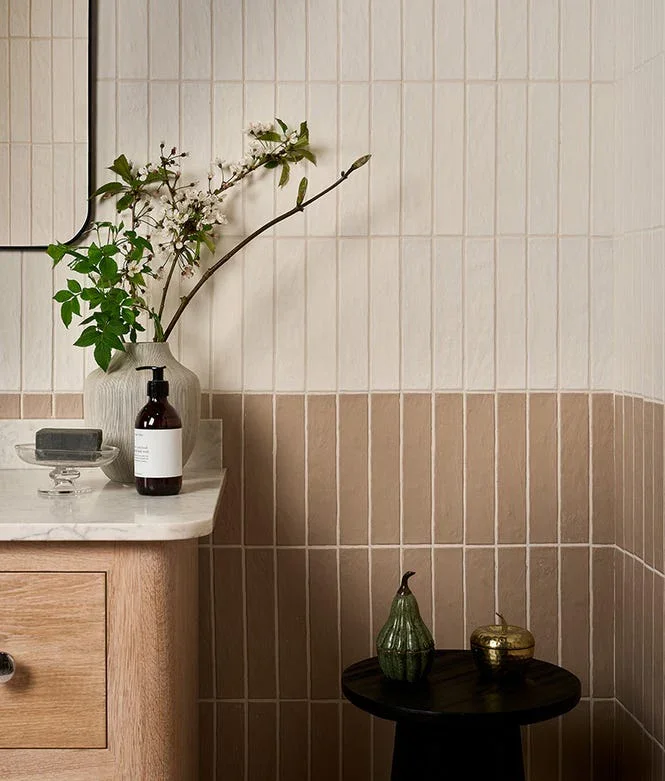
A monochromatic palette is one of the most effective ways to create a calm, cohesive bathroom.
Working within a single tone (e.g. warm neutrals, stone finishes) creates an enveloping, serene atmosphere, particularly suited to Scandinavian or Japandi interiors.
For a more elevated finish, consider extra-large format tiles or materials such as Dekton, which allow for a near jointless look and a more architectural feel.
Contrasting finishes (matt vs gloss)
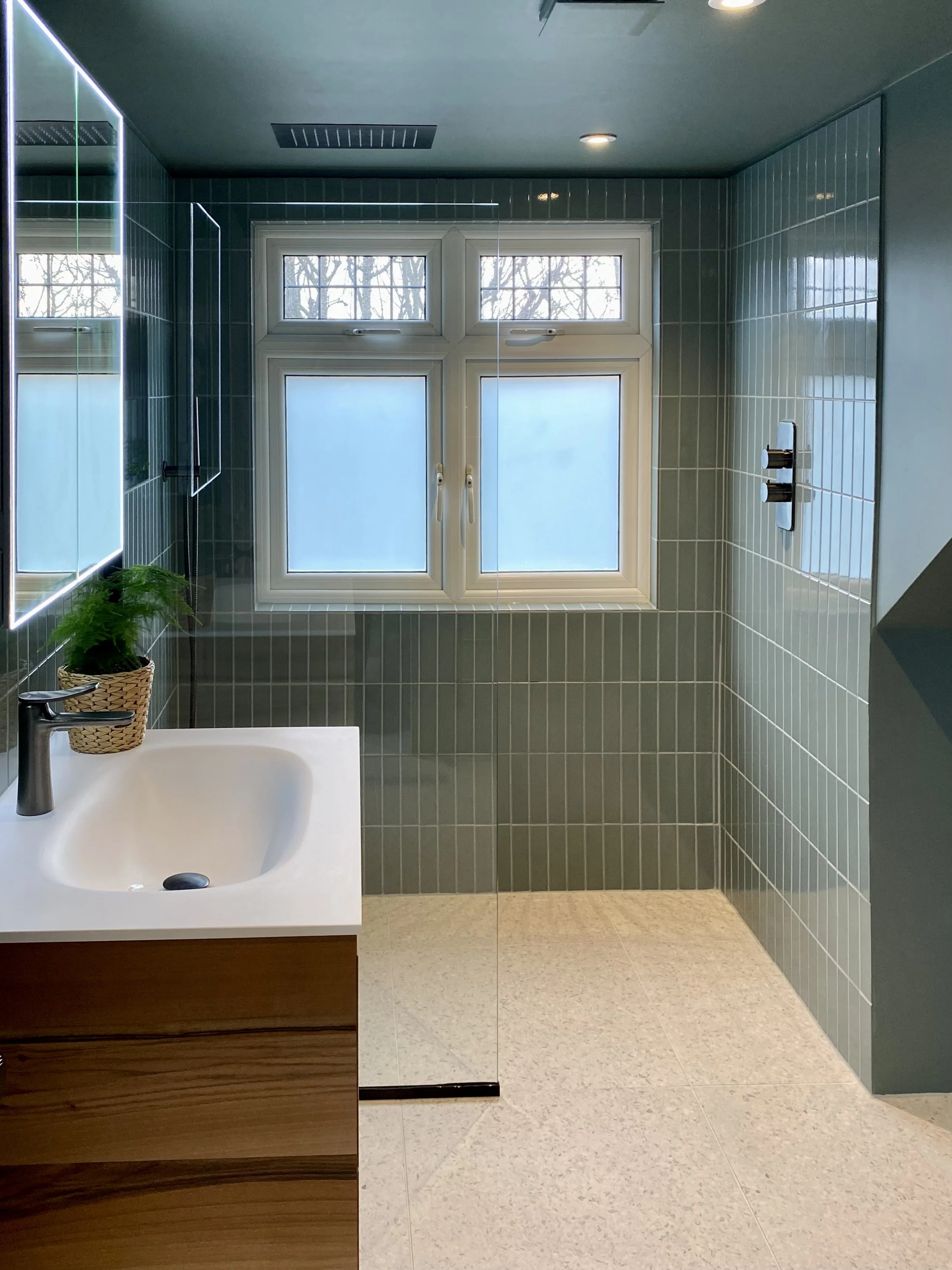
One of the safest and most versatile approaches is to contrast finishes.
A combination of matt floor tiles and gloss wall tiles works particularly well ; the matt surface grounds the space, while the gloss reflects light and adds subtle depth.
Introducing pattern
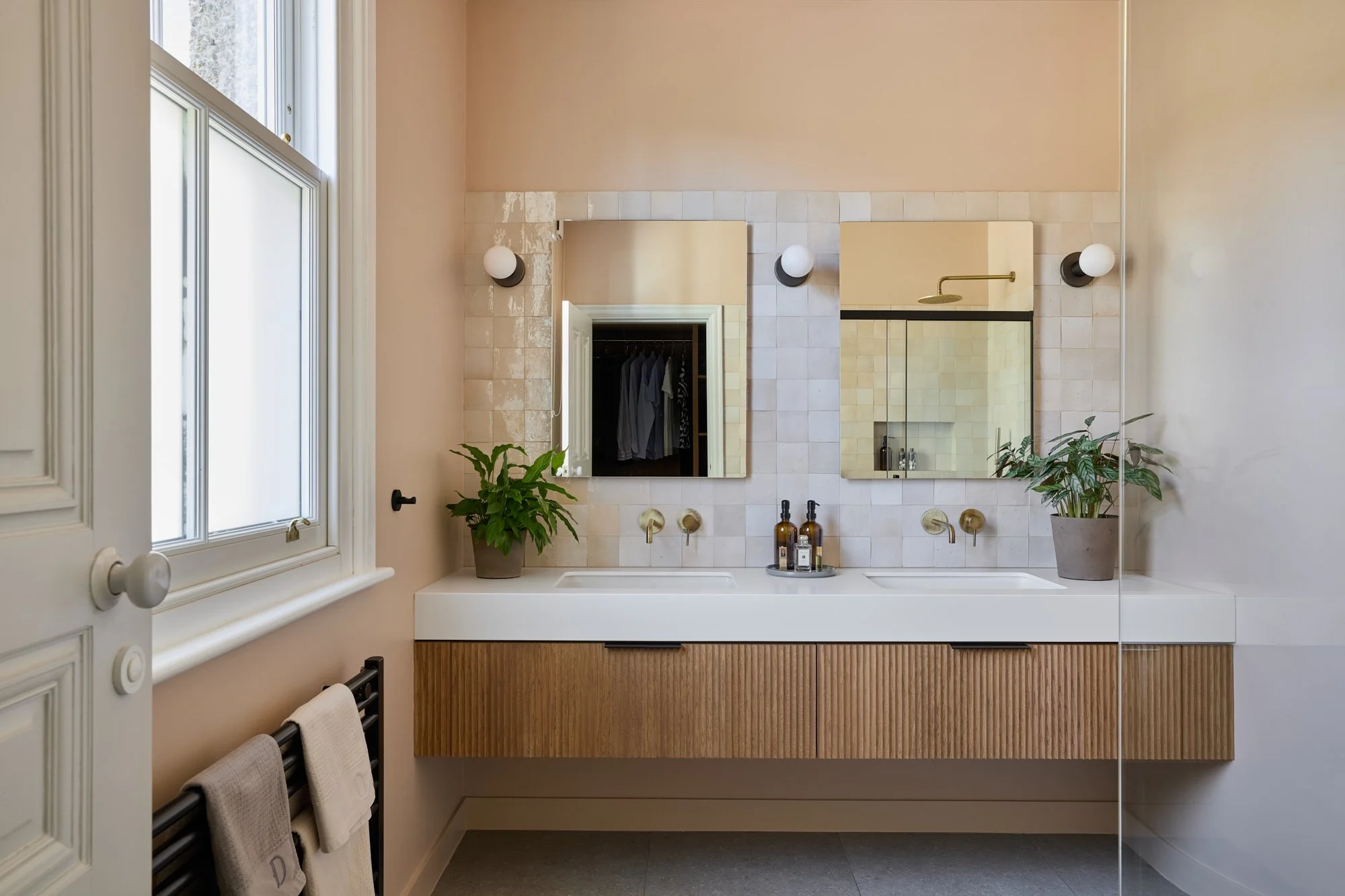
Even a small amount of pattern can bring character and energy to an otherwise neutral space.
I usually recommend choosing one “hero” element, for example a patterned floor, and pairing it with quieter surrounding surfaces.
More layered approaches, such as combining pattern with textured wall tiles, can be beautiful but require careful design.
Small format tiles: mosaic & kitkat
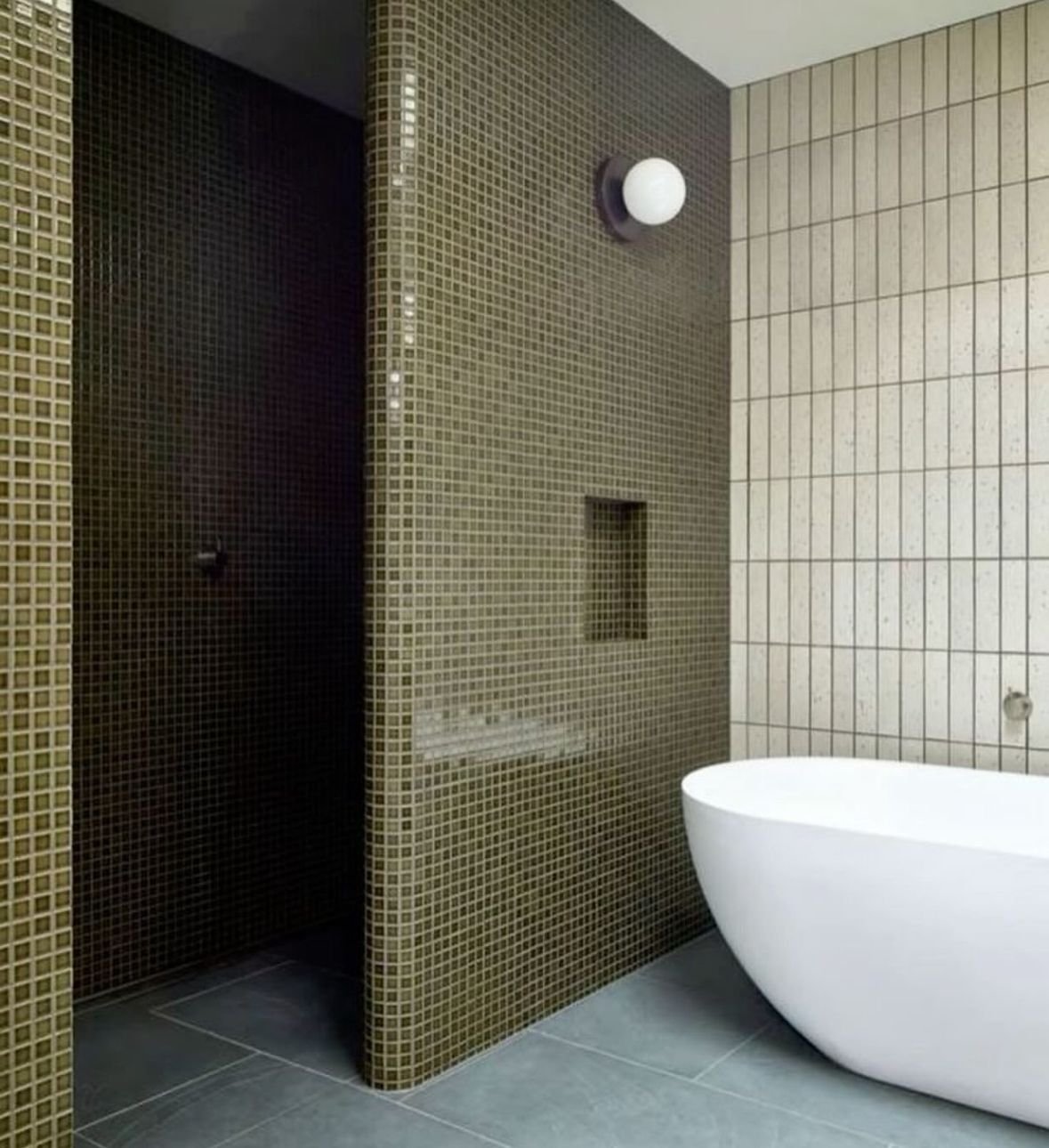
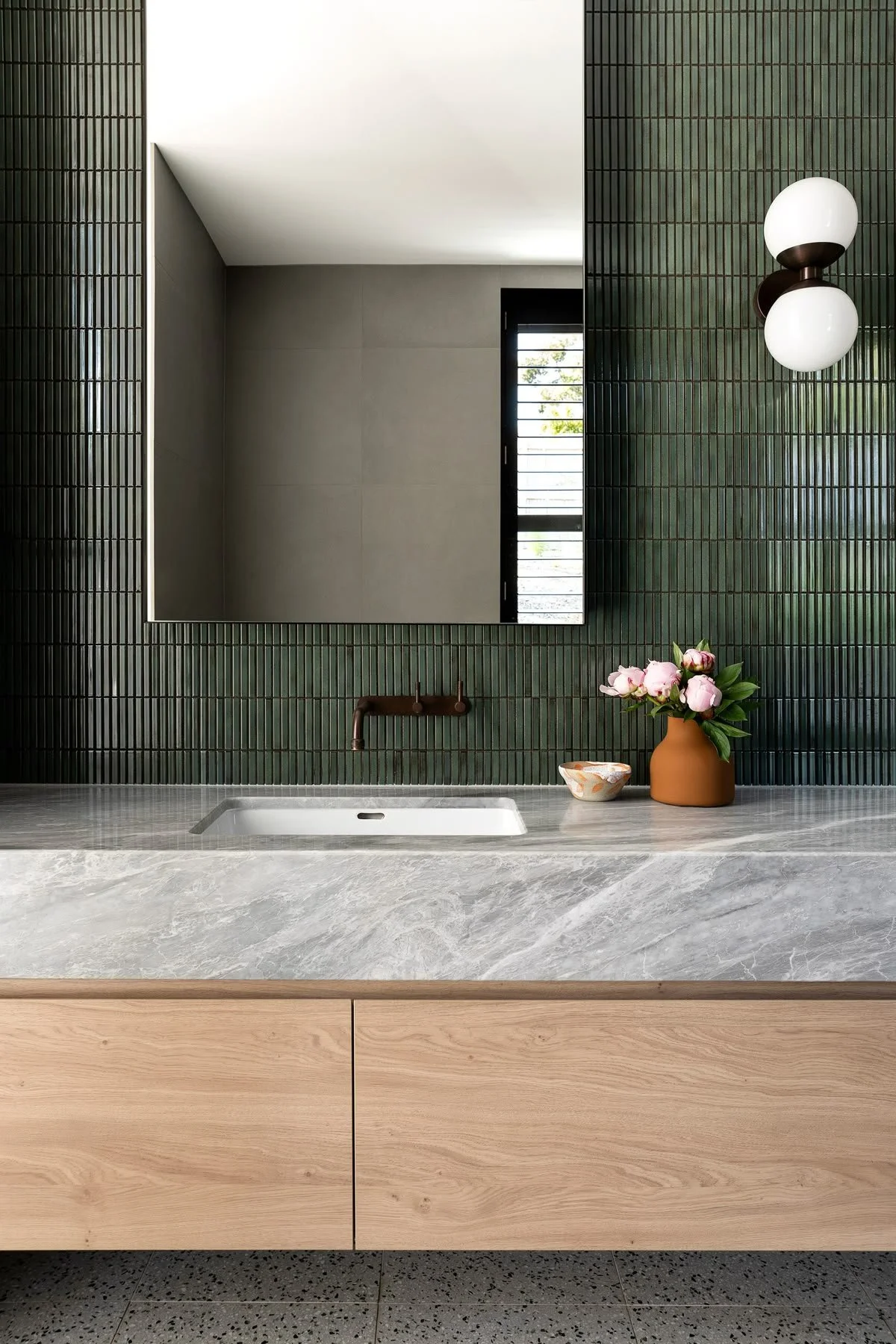
Small format tiles, such as mosaics or kitkat (finger) tiles, introduce rhythm and texture.
They naturally evoke a slightly retro feel, but when used thoughtfully, they remain timeless and playful. These are also an ideal solution for curved walls.
Square tiles
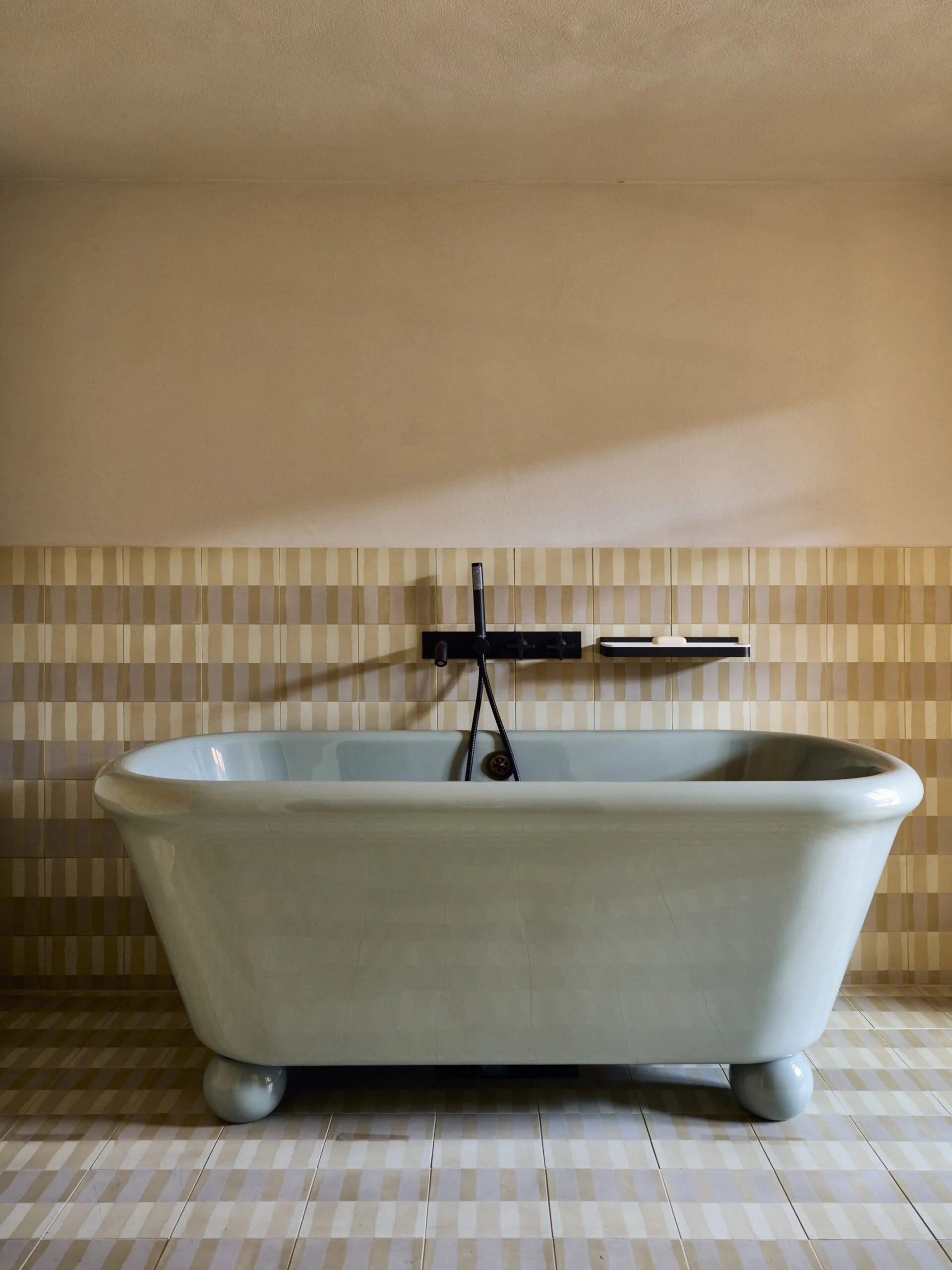
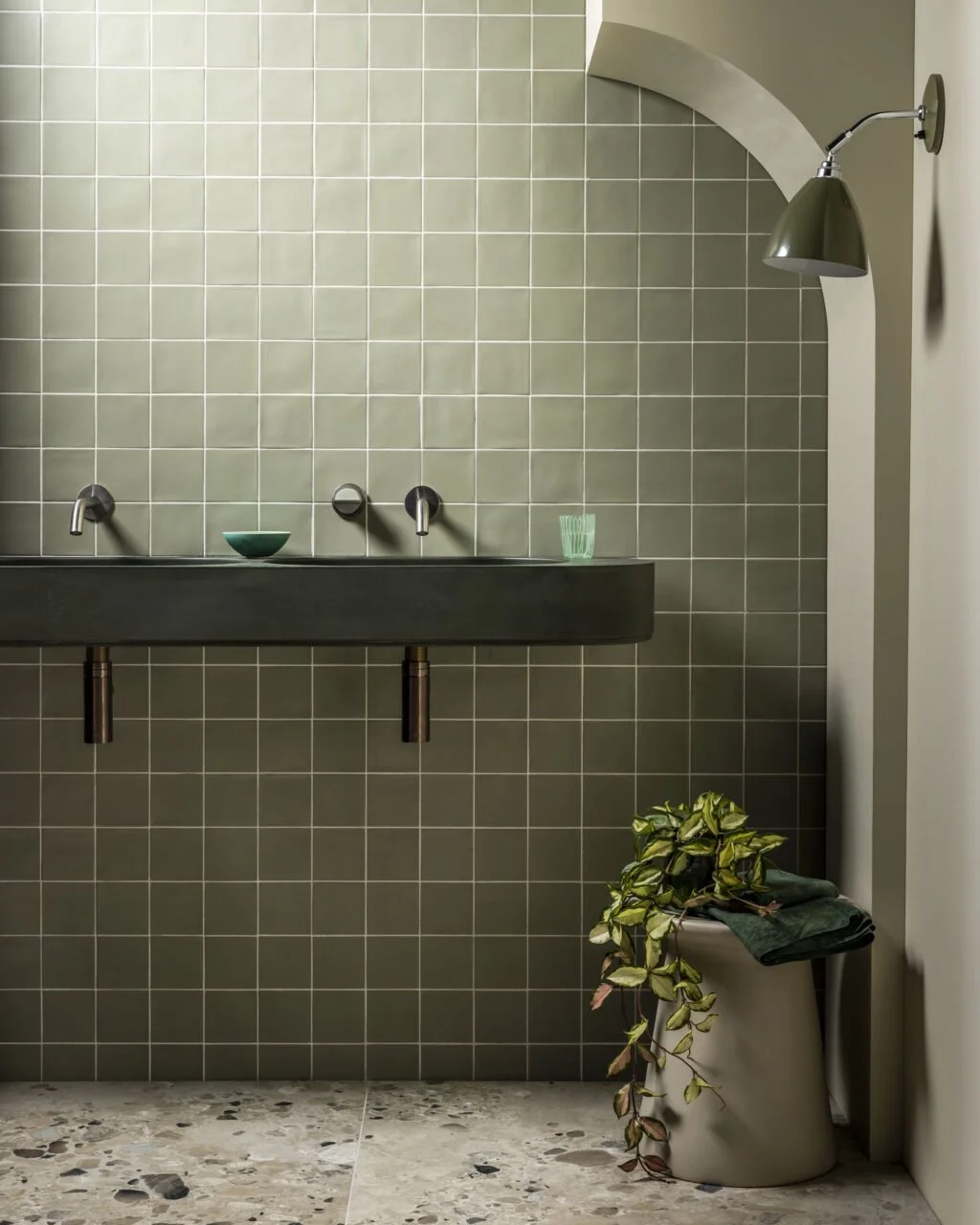
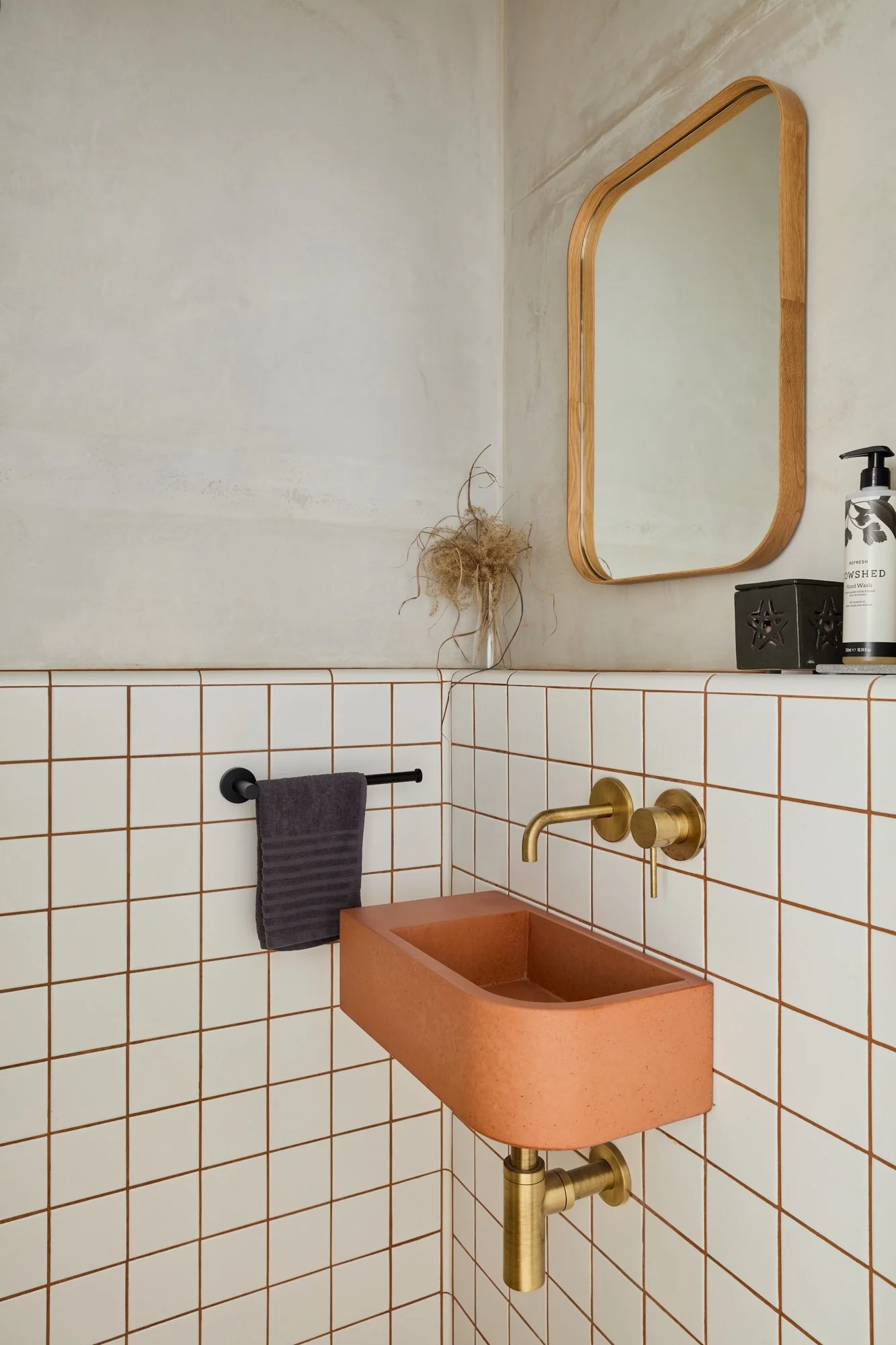
Square tiles, often in small 10cm x 10cm or medium formats, are a true classic with a subtle retro charm.
Whether laid in a classic stacked grid or softened with tonal variation, they offer a clean, structured look that works beautifully in both contemporary and more nostalgic interiors.
Glossy finishes in particular enhance this effect, reflecting light and adding a slightly playful, vintage-inspired touch. For a more modern interpretation, opt for muted or earthy tones, or experiment with grout colour to either highlight or soften the grid.
Stripes & directional layouts
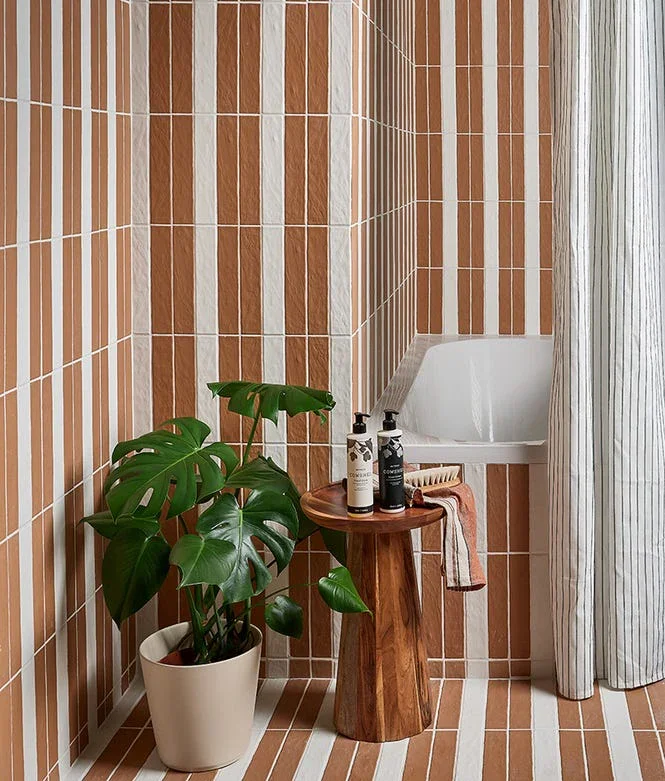
Stripes can be introduced either through tile choice or layout.
They are a simple way to add movement and can also be used strategically to visually elongate or widen a space.
Multi-colour using a single tile
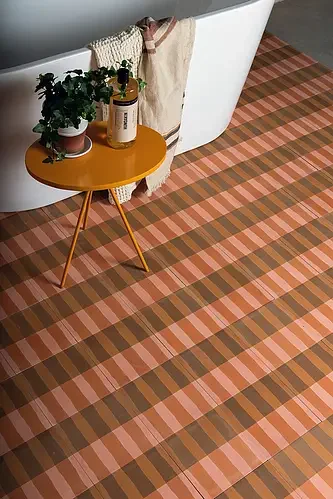
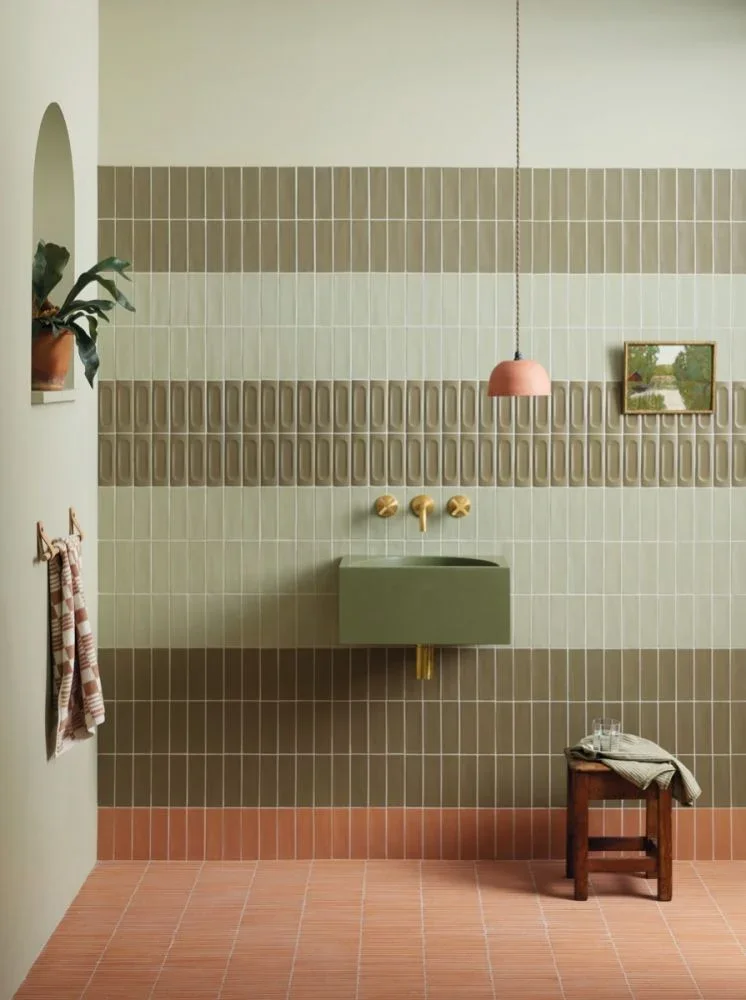
Using the same tile in multiple colours allows for playful compositions while maintaining cohesion.
This approach works well for more creative schemes, where colour becomes the main design driver.
Layered schemes (3+ materials)
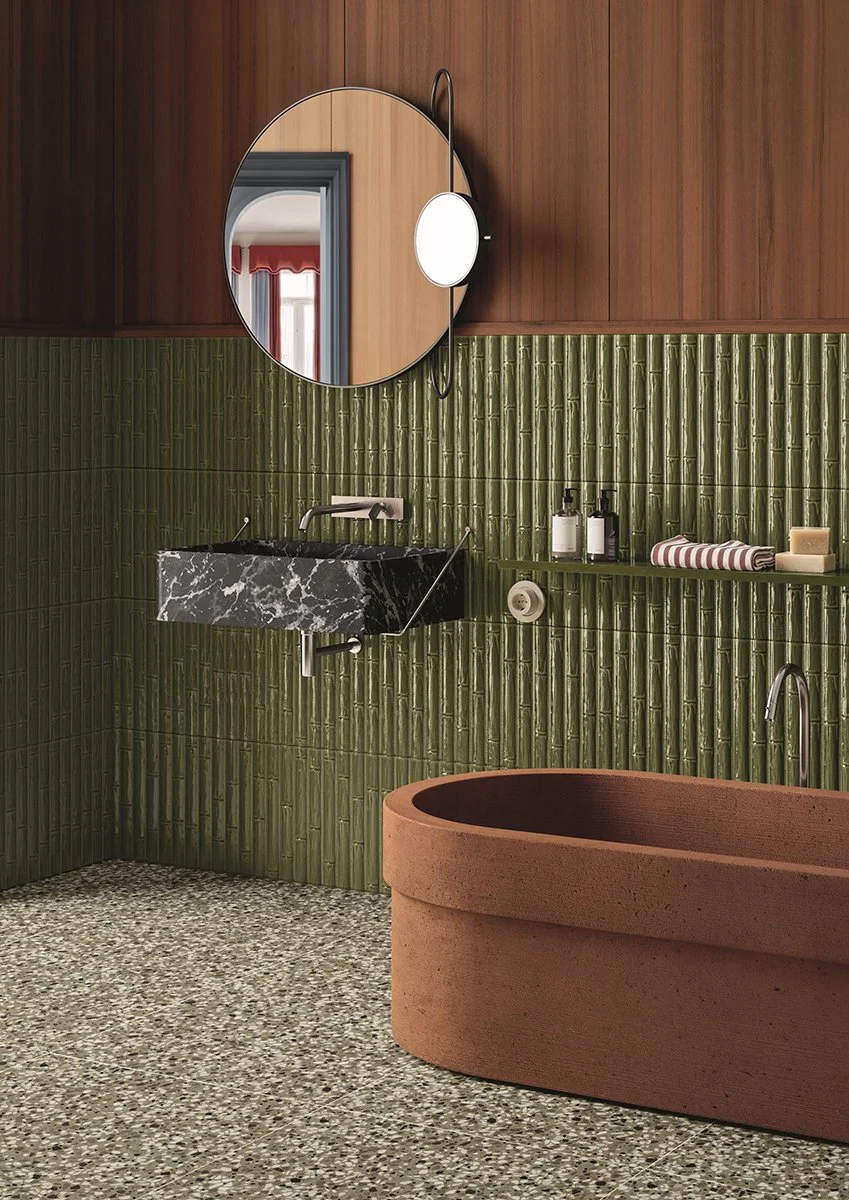
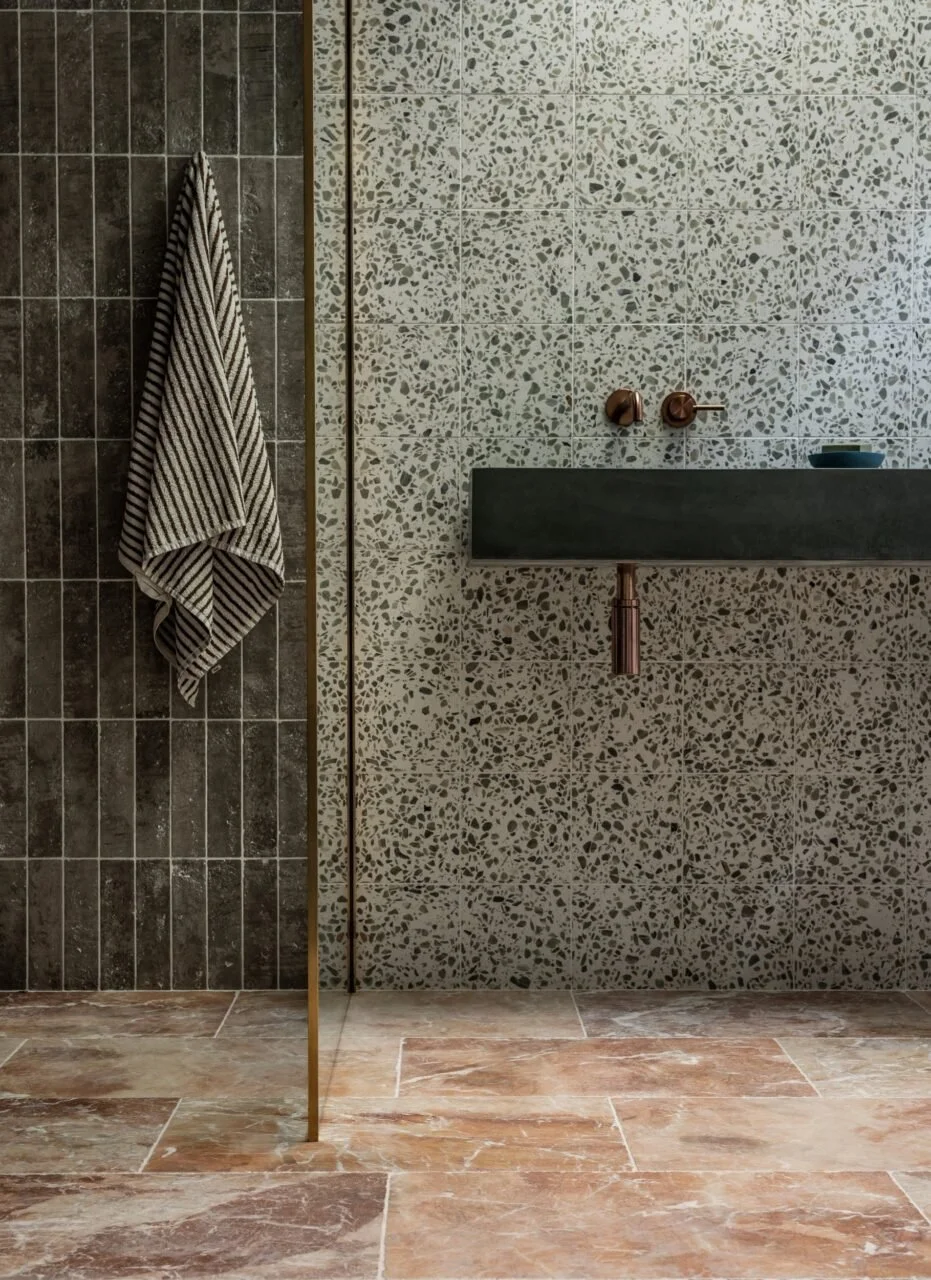
Combining three or more materials - tiles, stone, textured finishes - can result in rich and sophisticated spaces.
However, this is where things can quickly become complex. Balance, proportion and restraint are key, and I would generally recommend professional guidance for these more layered schemes.
While I tend to avoid natural stone in everyday bathrooms for practical reasons, introducing it in more considered ways can bring an unmatched sense of character and depth to a space.
Final thoughts
Tile combinations play a defining role in shaping the overall atmosphere of a bathroom, but they are only one part of a wider design language.
As explored in the previous posts, from selecting the right metals to refining the finer details, it is the dialogue between materials, finishes and proportions that ultimately brings a space together.
When considered as part of a holistic vision, tile choices move beyond aesthetics and become an integral part of a calm, cohesive and lasting design.